Trees that tell the stories of Druskininkai
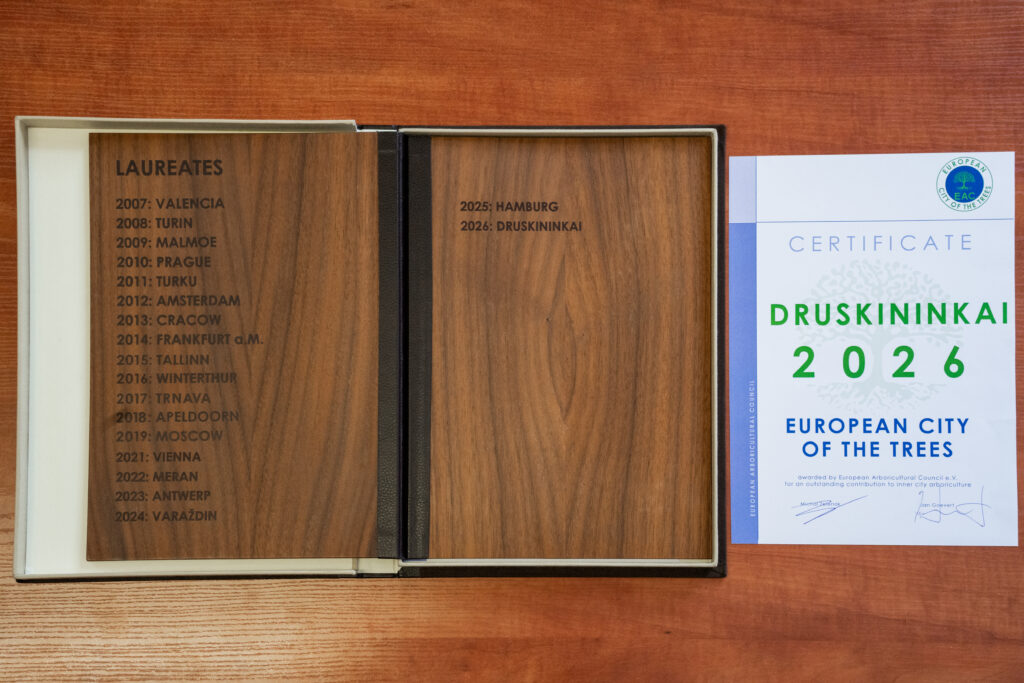
Druskininkai – the European City of the Trees for 2026 – invites you to embark on a unique journey of discovery through the trees that preserve the resort’s history, legends and memories. On this route, you will discover not only stunning natural sights, but also places that evoke memories of M. K. Čiurlionis, the historic Nemunas flood, romantic moments for newlyweds and adventures amongst the pine treetops. Every tree here tells its own story and allows you to discover Druskininkai from a new perspective – where nature and the town’s history merge into a single whole.
The historic pine tree of Mikalojus Konstantinas Čiurlionis
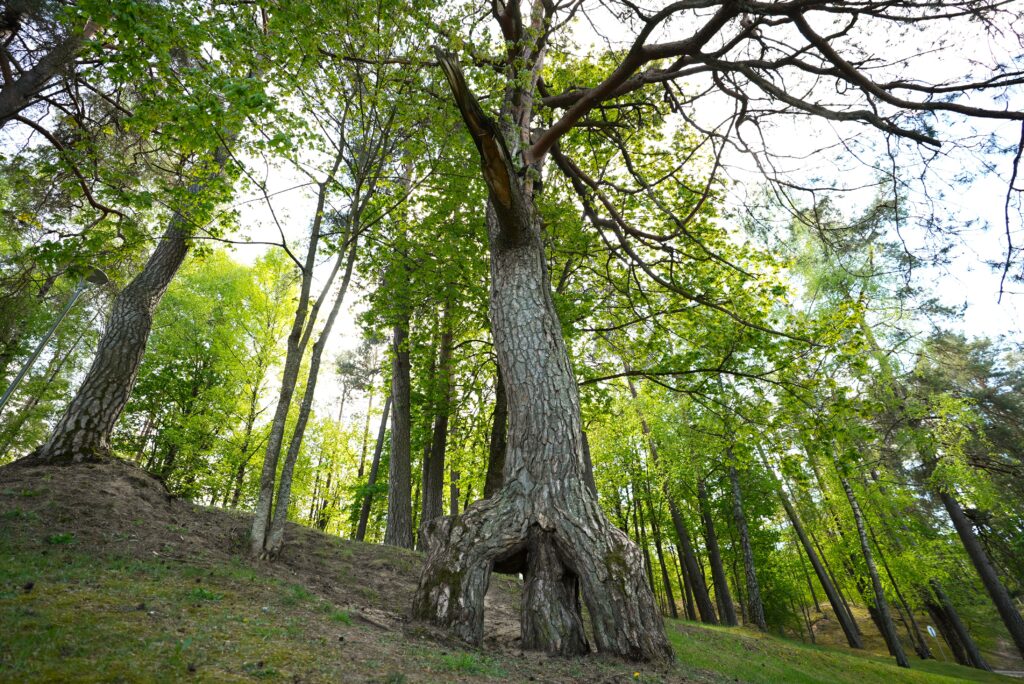
The pine tree that preserves the memory of M. K. Čiurlionis’s family
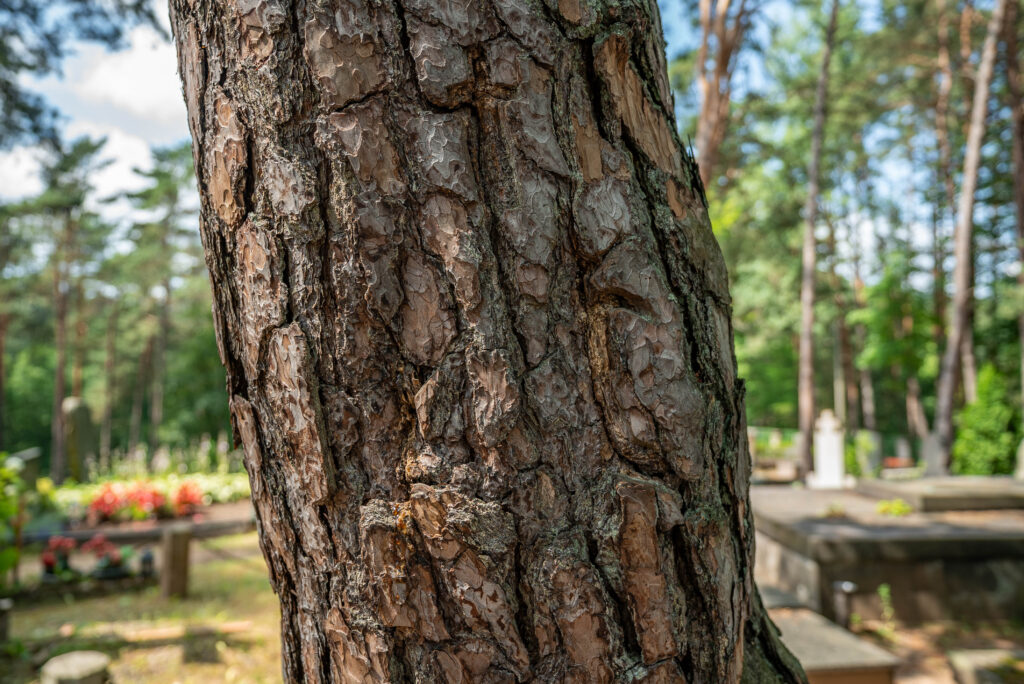
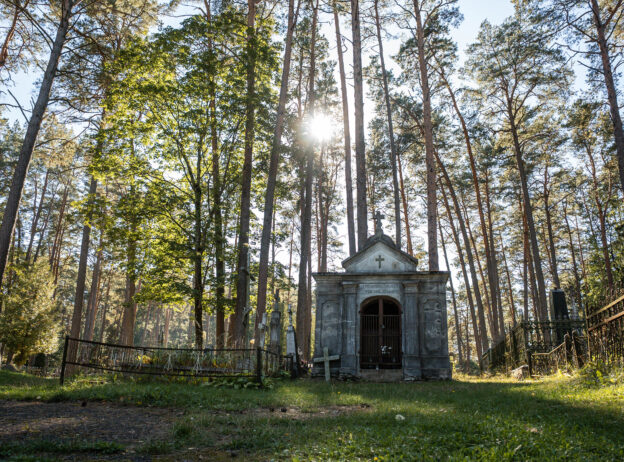
In the old cemetery in Druskininkai stands a remarkable pine tree, which preserves a quiet yet deeply meaningful symbol of the history of M. K. Čiurlionis’s family.
When the First World War broke out, M. K. Čiurlionis’s father, Konstantinas Čiurlionis, was buried here. There is no grave at the burial site, but the spot is marked by a small cross and initials carved into the trunk of the now-grown pine tree. As the tree grew, this mark became embedded in the trunk and to this day marks the burial place of the composer’s father.
When visiting the old cemetery in Druskininkai, do take a moment to look at this pine tree. Sometimes it is the smallest of signs that preserve the greatest stories.
The Curved Birch Tree in Druskininkai
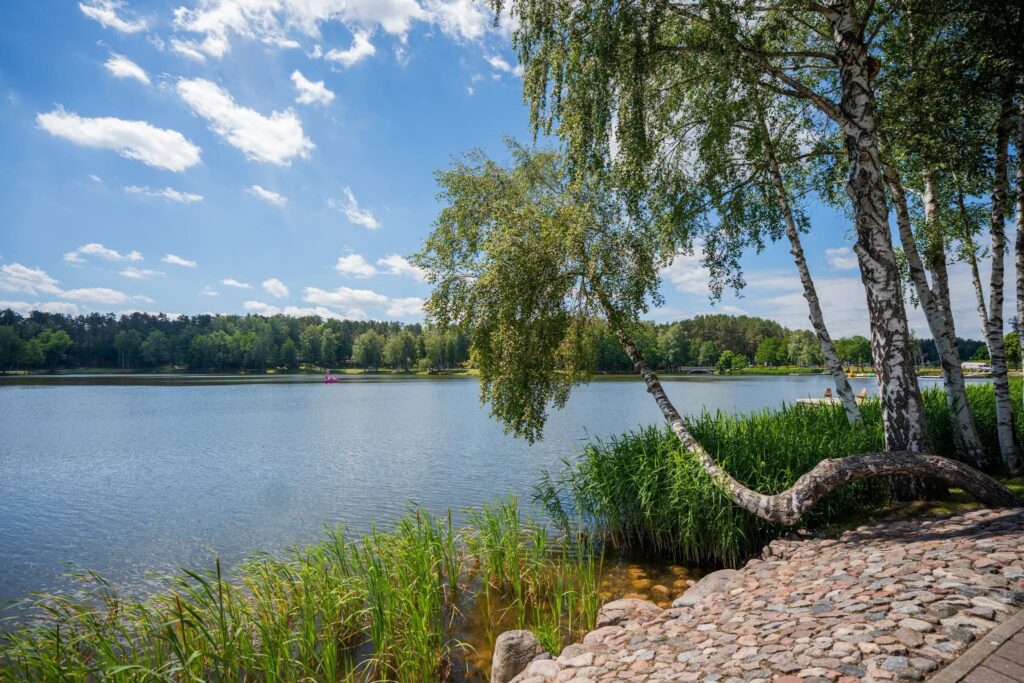
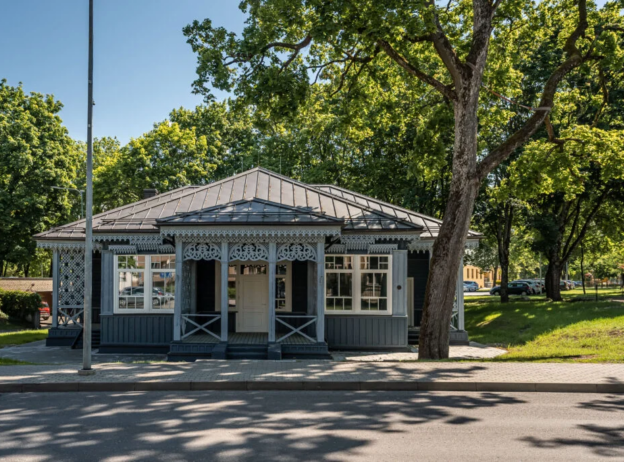
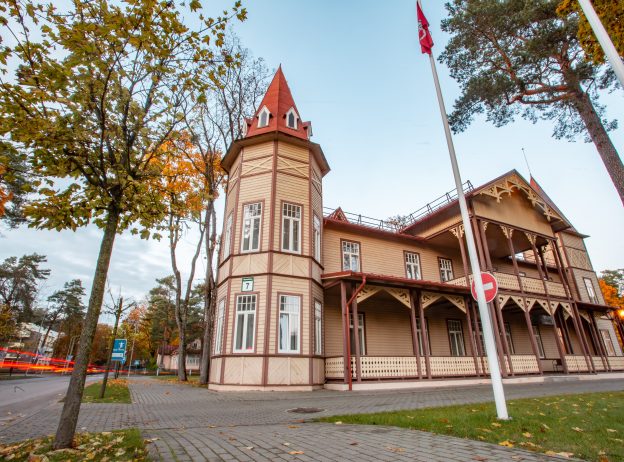
If you don’t have a photo taken next to the crooked birch tree in Druskininkai, you probably haven’t been to the real Druskininkai yet. The legendary crooked birch tree growing next to the Druskininkai Museum, often referred to as the ‘newlyweds’ birch’, has been one of the resort’s most romantic spots for decades. Over the years, hundreds of newlyweds have descended the museum’s steps, and this uniquely shaped tree has borne witness to their moments of happiness. Thousands of wedding photographs have been taken here, countless family stories have begun, and countless smiles have been captured.
The birch tree stands out not only for its unusually curved trunk, but also for its special aura. Many generations of Druskininkai residents regard it as a symbol of love, loyalty and new beginnings. That is why this spot continues to attract not only newlyweds – photographers, visitors to the town and anyone seeking cosy, authentic stories of Druskininkai stop by to take a look.
Pay a visit to the Druskininkai Museum and capture the moment by one of the resort’s most famous trees. Perhaps this photograph will also become part of your own beautiful Druskininkai tradition.
A tree that recalls the great Nemunas flood
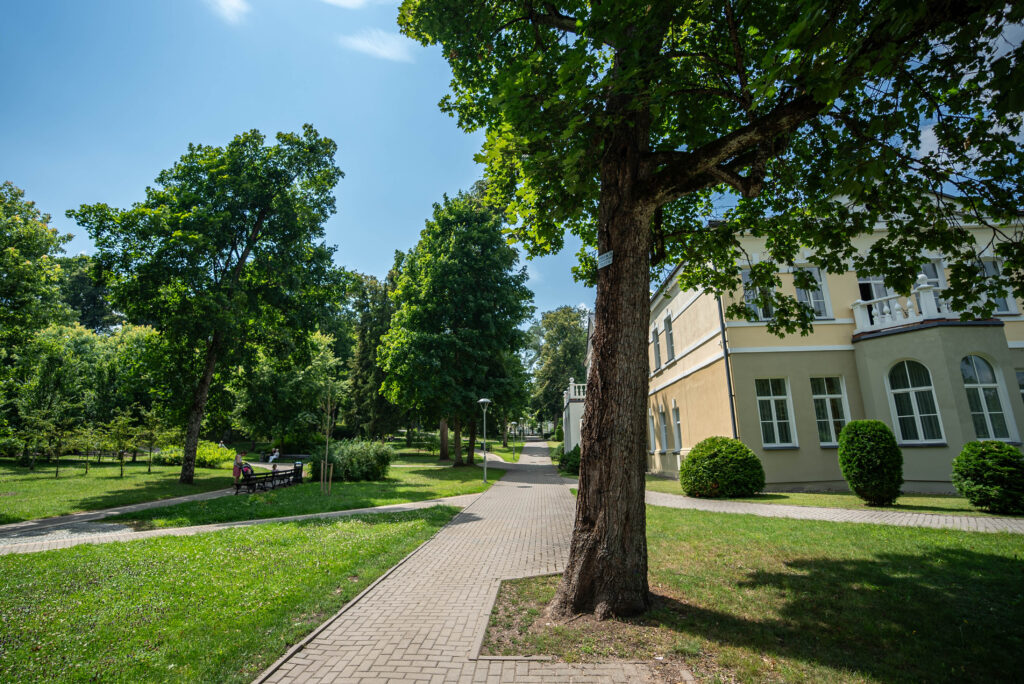
Look up – at a height of over 10 metres in Gydyklų Park, you’ll see a small plaque. It marks one of the most dramatic events in Druskininkai’s history – the Nemunas flood of spring 1958.
That spring, the Nemunas burst its banks so violently that the water flooded the entire area of what is now Gydyklų Park, along with the buildings that stood there. It’s hard to believe, but the place where holidaymakers now stroll peacefully had, at that time, been transformed into a vast expanse of water.
The most interesting thing is that it was not experts or surveyors who marked the water level of that first flood. A doctor working at Gydyklos, having rowed out in a boat, used a simple stick to mark how high the water had risen. Later, a commemorative plaque was erected at that spot. Although the original marker has since faded away, the new plaque installed in its place still serves as a reminder of one of the greatest Nemunas floods in Druskininkai.
Today, the tree bearing the mark of that historic flood stands as a silent witness, telling the story of nature’s power and how the resort has changed over the decades. Stop for a moment, look at the plaque fixed high up and try to imagine – the water once reached exactly this level. It is one of those little details in Druskininkai that allows you to get to know the town not only with your eyes, but also through its stories.
The Švendubrė (Kastukas) Oak
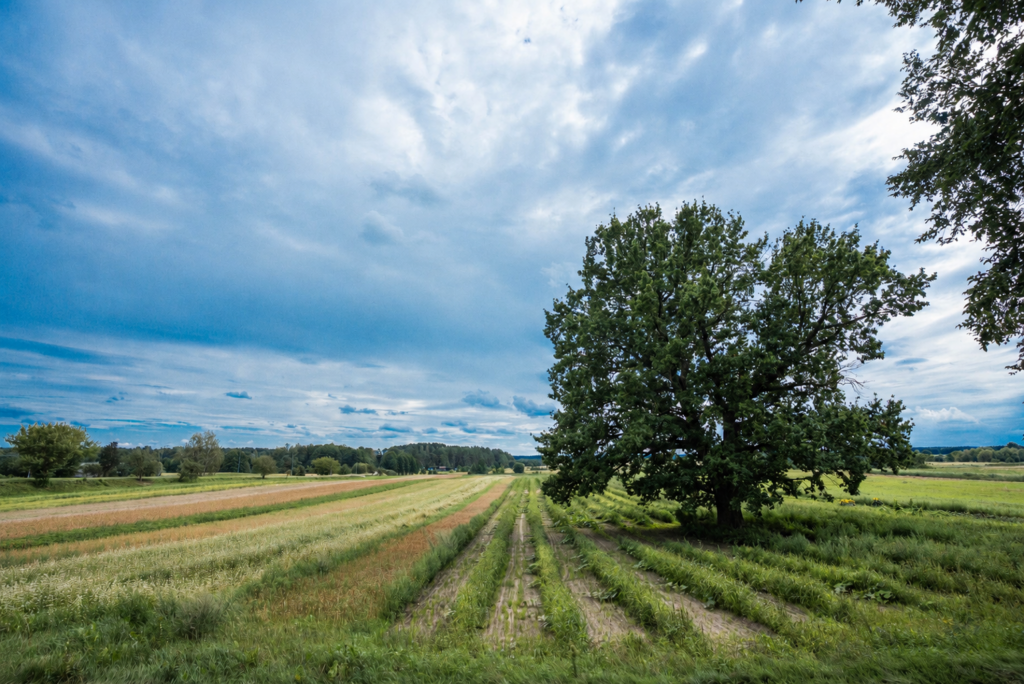
On the edge of the Raigard Valley, not far from the picturesque village of Švendubrė, stands the ancient Švendubrė Oak, also known locally as the Kastukas Oak or the M. K. Čiurlionis Oak.
This place is inextricably linked to one of Lithuania’s most famous artists. The Raigardas Valley and Švendubrė were particularly dear to Mikalojus Konstantinas Čiurlionis – he visited here on numerous occasions, seeking peace and creative inspiration. In 1907, one of his most famous works was created – the triptych ‘Raigardas’, which immortalised the grandeur and mysterious beauty of this region. It is said that the old oak tree growing in the fields inspired the artist to create the painting ‘Sonata IV. Andante’. Although this is a story passed down by the local people, it is still alive in Švendubrė today and gives this tree a special significance. That is why the locals affectionately call it Kastukas’ Oak – as a child, M. K. Čiurlionis was known as Kastukas.
Today, the Švendubrė Oak is not only an impressive natural monument, but also a living link between nature, history and art. Stop beneath its canopy, gaze out over the expanses of the Raigard Valley and allow yourself, if only for a moment, to feel the same inspiration that accompanied M. K. Čiurlionis more than a century ago.
Trees full of adventure
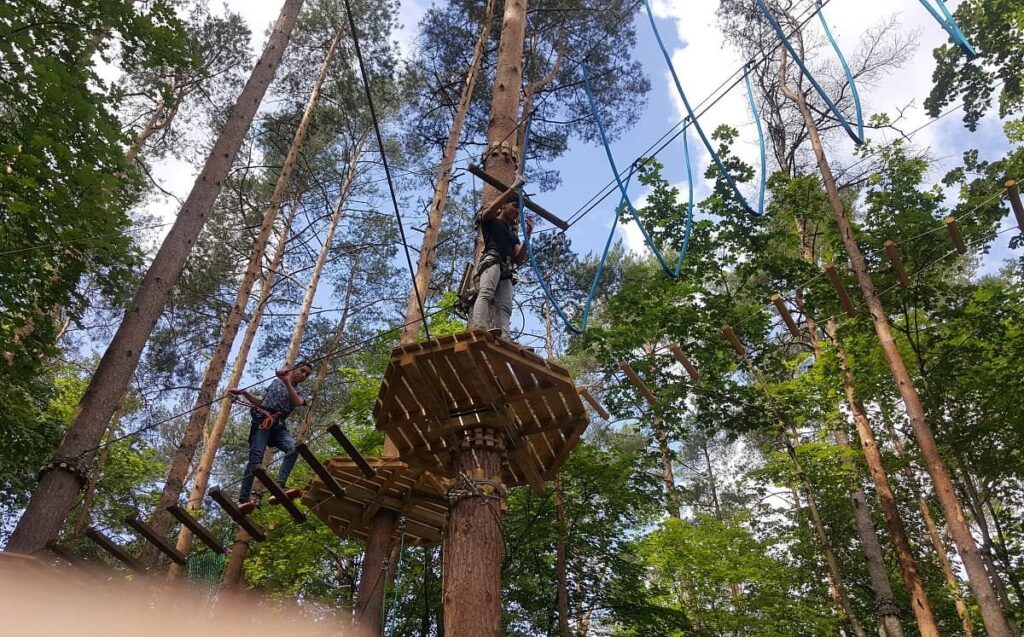
In Druskininkai, the trees don’t just tell stories – they invite you to experience them. At the UNO Adventure Park, the pine trees become a veritable world of adventure: climbing routes of varying difficulty wind their way through them, whilst the most spectacular zip lines stretch right across the Nemunas. Here, nature is not merely a backdrop but a central part of the adventure – the trees allow you to see the resort from a completely different perspective.
The pine trees in K. Dineika’s Wellness Park
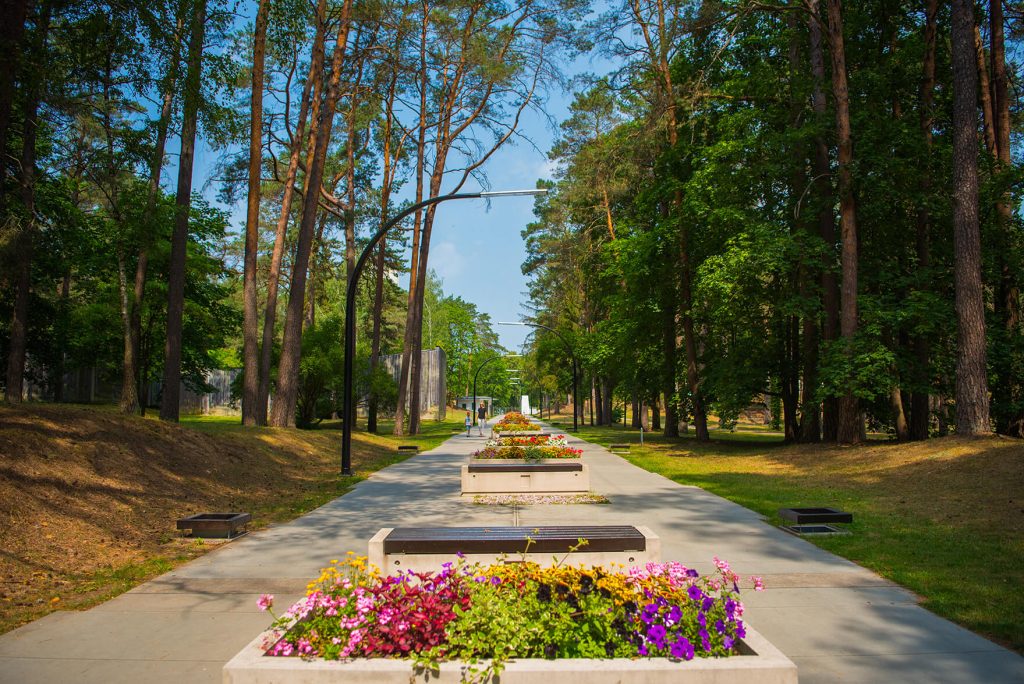
For over 100 years, the K. Dineika Wellness Park has been upholding the traditions of wellness in nature. These traditions were initiated by Dr Eugenija Levicka and later developed by Karolis Dineika, who created a unique methodology based on the sun, air, water and exercise. Surrounded by mature pine trees, the park is filled with air rich in negative ions (anions), which, together with the peaceful surroundings, helps visitors to relax and recharge their batteries. It is no coincidence that, for over a century, this place has been one of the most important health resorts in Druskininkai, where nature becomes an integral part of one’s well-being.