Legends of the resort, hidden in forests, stones, and clear waters
The Legend of Love Island
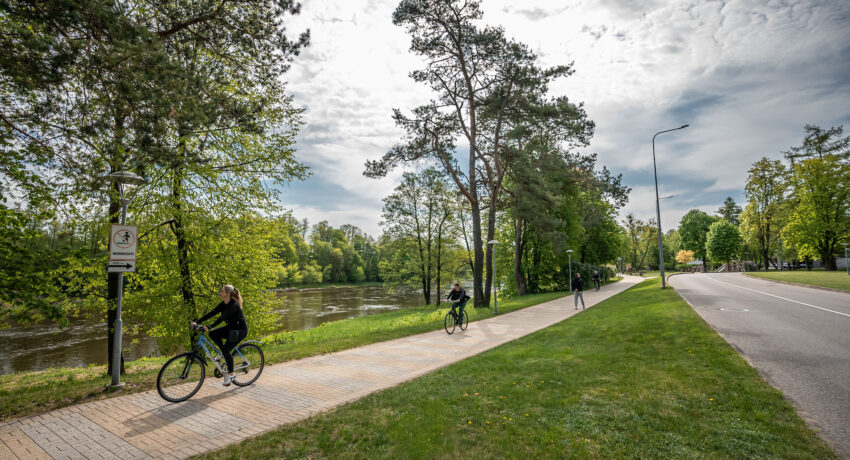
This story has been passed down to our times. In ancient times, on June 24, girls would float wreaths down the river and make wishes. One beautiful young girl wove a wreath and floated it downstream. After some time, everyone forgot about this tradition. One day, the girl was rowing a boat with her beloved when she saw her wreath on a shoal near an island. She was surprised and delighted to see that the wreath had taken root in the sand and blossomed with fresh flowers. This showed her that her beloved’s feelings for her were constant. Overjoyed, she threw herself into his arms and held him tightly. The boat lost its balance and capsized, and the young man and the girl disappeared into the depths of the Nemunas River. Since then, people have called this place the Island of Love.
The legend of the Švendubrė Stone
…The city of Raigard was ruled by a wicked duke who revelled with his courtiers so much that even the devils of hell were outraged. They sent one of their own with a huge stone to kill the duke and his henchmen and destroy the city. However, it was difficult for the devil to fly while carrying the stone in his claws, and when the first roosters began to crow, he dropped the stone before reaching Raigard… That is why some people still call it the “Devil’s Stone.” People also came up with a story that there is a cave beneath the stone leading to the sunken city of Raigard.
The Legend of the City of Raigard
Not far from the Švendubrė Stone, on the other side of the Nemunas River, lies the village of Lipliūnai. Long ago, a very strong but poor man lived there. One day, he met another man who was just as poor, and together they decided to go in search of gold. They had heard that a great treasure lay hidden beneath the Švendubrė Stone.
One dark night, when no one could see them, they set out to dig for gold. After digging for a long time, they discovered a cave that led to a vast plain, where a magnificent city stood. They realised it was Raigardas.
Encouraging one another, they entered the city. The inhabitants welcomed them warmly, offering them food and drink. After three days, they rewarded the men generously with gold and made them promise never to reveal the city’s existence. Then they sent them home.
However, once back home, the men could not resist telling their wives everything they had seen. The moment they finished their story, they lost their speech, as did their wives. All four were left mute, unable to tell anyone what had happened to them…
The Legend of Raigard Valley
Once upon a time, long ago, a city stood atop a high and beautiful hill in the Raigard Valley. It was much like any other city, but when its inhabitants grew rich through warfare and plunder, they began to feast, gamble and lead lives of unrestrained debauchery.
For a long time, their behaviour angered everyone around them. Finally, on a stormy and dreadful night, Perkūnas, the god of thunder, destroyed the city’s towering palaces and set its houses ablaze. The inhabitants, along with the ruins of their city, sank into the depths of the earth.
They long to return to the surface, but a swamp and dense thickets lie above them, blocking their way. Every evening, they ring the church bells that remain underground, pleading for mercy. Even today, some villagers claim to have heard bells ringing from deep beneath the earth…
The salty mineral waters of Druskininkai are said to be the tears of these underground inhabitants.
Source: B. Kondratenka and J. Jančiauskas, Po Druskininkus ir apylinkes (Around Druskininkai and Its Surroundings), Vilnius: Mintis, 1968.
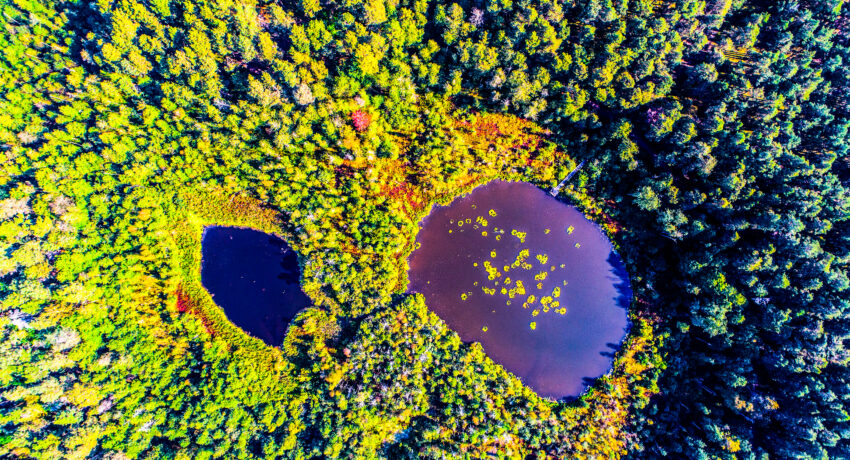
The Maiden’s Eyes
According to legend, a beautiful and clever young woman once captivated all the men in the resort. They dreamed of meeting her, talking to her and gazing into her clear blue eyes.
On the last day of summer, the young woman arranged to meet all her admirers at Lake Druskonis. The men gathered, eagerly looking around and waiting for the fair-faced, blue-eyed beauty, but she never appeared.
When they learned that she had vanished before dawn, they were overcome with sorrow and began to weep. Their tears streamed down the hillsides and their slopes, flowing in rivulets.
And so, two small bodies of water came into being – the Maiden’s Eyes.