Historical pine tree of M. K. Čiurlionis immortalised in Druskininkai
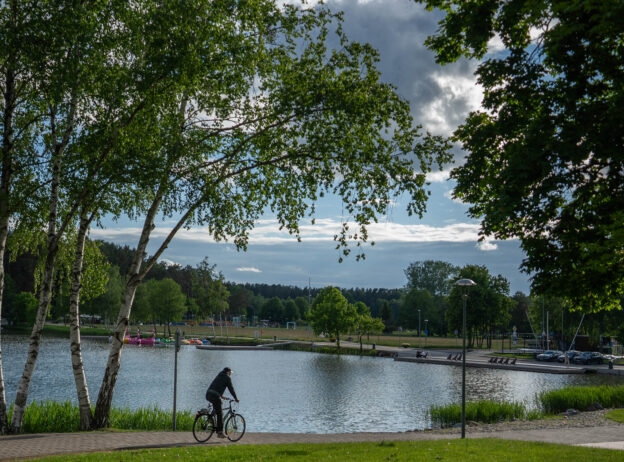
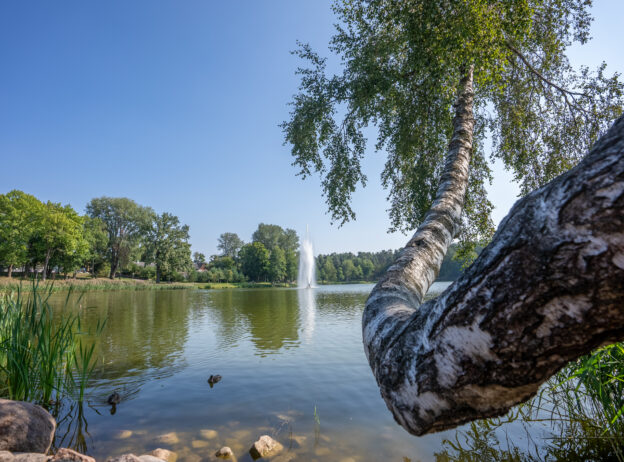
A historical pine tree symbolically commemorating the life of the most famous Lithuanian artist was immortalised by the Druskonys Lake, where the nature is filled with the spirit of M. K. Čiurlionis’s work. The ceremony was attended by the Mayor of Druskininkai Ričardas Malinauskas, the Mayor’s advisor Aldona Jankauskienė, the Head of the Tourism, Communication and Culture Department of Druskininkai Municipality Vaiva Žagunienė and her deputy Antanas Urbonas, the Director of the Druskininkai Culture Centre Raimonda Varaškaitė, the Director of the Druskininkai Tourism and Business Information Centre Rimantas Palionis.

The history of the pine tree was presented by the art historian Aušra Česnulevičienė, whose initiative has given a tangible form to this link between nature and culture – you will find a QR code next to the historical tree, which you can scan to find out more about the life of the Čiurlionis family in Druskininkai. According to her, this pine tree is not only a silent witness of M. K. Čiurlionis’ life in Druskininkai, but also a living link between nature, man and art.
________________
The picturesque landscapes of Southern Dzūkija are the birthplace of the family of organist Konstantinas Čiurlionis and Adela Čiurlionienė.
When the Čiurlionis moved from Ratnytsia to Druskininkai, they had no home of their own for a long time and rented an apartment from the resort’s permanent residents. The family lived for a while in the house, which they later bought and which is now the M. K. Čiurlionis House-Museum.
The memories of Jadvyga and Valerija Čiurlionytis refer to the family home by the Druskonis Lake, which their parents rented for almost two decades. Although you won’t see this modest little tree today, you can touch the historic pine tree that commemorates the life of the Čiurlionis family by the lake.
“There was a very strange pine tree that grew near our cottages. Its thick roots were curiously spread out on the ground, forming a kind of stool.Our brother Mikalojus Konstantinas often liked to sit on this ‘stool’ in the evenings, watching the sunset on the other side of the lake.”

The pine tree “running” down the hill is easy to find, and its roots, erupting into the ground like mothballs, will catch your attention.
After working as an organist in the churches of Liškiava, Stara Varena and Ratnytsia, Konstantinas Čiurlionis worked in the old church of Druskininkai for as long as twenty-eight years (1878-1906).
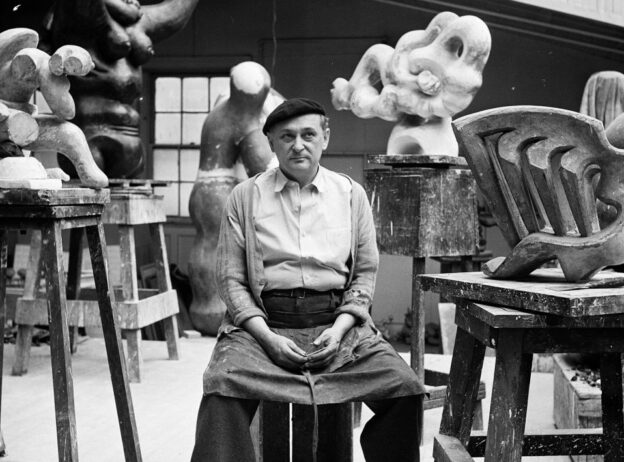
Art historian Aušra Česnulevičienė