Druskininkai is like a second home for a German couple: a twenty-year love story
There are places that just beckon you to come back. For Irina and Alexander Geiger, who live in Germany, Druskininkai has been such a place for twenty years. They have visited the resort more than 20 times, and for the last five years the couple have been finding peace and quiet at the campsite in the Druskininkai Tourism and Business Information Centre (TVIC). When asked what attracts them most, Irina and Aleksanderis don’t hesitate to say it’s not just the nature or the order, but the exceptionally warm human interaction.

For the past five years, Irina and Alexander Geiger have been finding peace and quiet at the campsite in the Druskininkai Tourism and Business Information Centre (TVIC) / Photo by Robert Kisieliaus
“What surprises us the most is the friendly attitude of the people towards a visitor to the city,” Alexander began his story. – We noticed this not only in the spa or the campsite, but everywhere – in the shops, in the city itself. Everyone is kind and polite.”
Irina agreed, pointing out that there have been no negative experiences in Druskininkai in the last two decades: “Never once have we had a rude response or a rude behaviour. People are always polite. Even if the young people don’t speak our language, they always try to explain and show us. It’s never been a case of just waving a hand.”
This cordial relationship is one of the main reasons why the Geigers keep coming back to Druskininkai. They said that even Rimantas Palionis, the director of the Druskininkai TVIC, welcomes them as old friends – like relatives. “When we start approaching the campsite, I can feel my mood improving. It’s like coming home,” Irina smiled.

Irina and A. Geigeris appreciate the Druskininkai campsite and its staff / Photo by Robert Kisieliaus
– What was your introduction to Druskininkai?
Aleksanderis: We came to Druskininkai for the first time 20 years ago, and we have visited it many times since. The first place we went to was the Eglė Sanatorium, where we really liked the family atmosphere. Later, on the city’s excursion train, we saw a campsite and decided to try it out.
Last time we hadn’t even planned to go to Druskininkai, we had gone to the Polish seaside by campervan. We spent four days camping and it was a bit boring. I told Irina: “Well, what if we stay a couple more days and go home?” And she looked at me and said: “How about we go to Druskininkai?” I said: “Well, maybe.” So we sat down and came to your resort unplanned.
Irina: Every time we come back to you for a very simple reason – the people. Everyone, from the spa staff to the sales people, is extremely kind and friendly. It’s never been a case of just waving a hand. This sincerity and respect is the greatest asset.
Alexander: That attitude just attracts us. We feel welcome. I remember when I was seriously ill during one of my stays and was admitted to the hospital in Druskininkai, my wife and I were shocked – in a good way! Although the experience was full of anxiety, our impressions of the staff’s work were extremely positive.
They were all wonderful. The nurse kept my wife informed about my condition and reassured her. And she was equally caring, not only with us tourists, but also with the local woman waiting nearby. Everyone was given the same attention.
Everybody knows the saying that it is always nicer to give than to receive. I am convinced that people need to give good things. Then you have this circle: I did good, they did good to me, and you have this unique circle of a life filled with goodness. And if I come with the intention to show how important I am, to demand something, to be rude, that’s how I will be treated. I just always put myself in the place of the person who is serving me.
Irina: When I returned home, I told the German hospital that they still needed to learn from the staff at Druskininkai Hospital. In the past, there were no such machines, no such preparations, but a kind word helped people. This value is still preserved here. In Germany, this is no longer the case – you want to ask a doctor a question and he has already closed the door on the other side…
– What else fascinates you in Druskininkai besides the people?
Irina: Nature, of course. We can’t get enough of the order and beauty of the resort. There are a lot of tourists here, but the town is perfectly clean and tidy, with flowers everywhere. It’s just amazing. I particularly like the K. Dineika Wellness Park, where the clean air and the tranquillity make it possible to completely relax.
Alexander: I totally agree. When I was in the army, they used to say: “Clean is not where you clean all the time, but where nobody cleans.” People in Druskininkai seem to understand that. We also see how the town is constantly changing and beautifying. A new bus station is being built now – when we saw it, our eyes popped out of our foreheads. When we visited in April, there was nothing there, and now the building is going up!

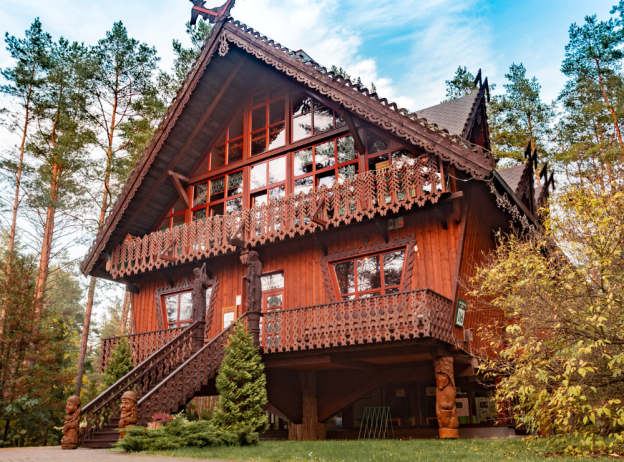
Druskininkai campsite / Photo by Robert Kisieliaus
– How do you spend your time in Druskininkai? Are you active holidaymakers?
Aleksanderis: Our holidays have changed over the years. When we were younger, we were more active – we even went to dances in the sanatoriums (laughs). Now we want to be quiet. We enjoy a slow pace: we get up, have a leisurely breakfast, go for a walk around the city.
Even though we seem to know everything here, we’ve seen everything here, we always discover something new for ourselves, see something new. The city is constantly renewing itself.
Irina: We also go to cultural events, concerts. But when we stay at the Druskininkai campsite, we don’t take any medical treatments. We just want to rest, not run around the treatment centres on a schedule, like going to work. That’s what we do when we stay in a sanatorium. And here, there is complete freedom.
– Tell us about your trips to Druskininkai. Do you cover a lot of distance by campervan?
Alexander: (Smiles) Well, Irina and I have some differences of opinion about travelling by campervan. As the joke goes, there are two opinions: one is mine and one is wrong. And the campervan has been an old dream of mine.
Irina: I’m more of a homebody and I didn’t really want that car at first. But now… I’m used to it. We have to drive 1,400 kilometres from home to Druskininkai. It’s a long way, so it’s a bit tiring, but being able to travel at your own pace and stop for a rest makes up for it. With a campervan, there is no constant rush. You drive quietly, you enjoy the process. And as we approach Druskininkai, it feels like coming home. That feeling makes everything worthwhile.
Alexander: Exactly! My colleagues in Germany ask me why I keep going to Lithuania, why I don’t look for new places. My answer is simple: why risk it? You can go to an unknown country and be disappointed, you’ll waste your time. And here we know that 99.9% will be fine. And it always gets better!
We really like the Druskininkai campsite staff. It is very good. We’ve known them for a long time, and we’re friendly. It’s nice that the young people are open to us too. We communicate, we learn something. We are interested in what young people are breathing today, what they are thinking about. And we care about how our children and grandchildren will live in the future.
– What advice would you give to those who might be thinking about visiting Druskininkai?
Irina: Be sure to come! You will never regret it. Even if it’s only for a few days. It’s so peaceful, the people are so nice. We will be back many times, health permitting.
Alexander: I always feel like you call, you answer. If you come with a good mood, with respect, that’s what you get back. And in Druskininkai, the price-quality ratio is unbelievable. Our compatriots cannot believe it when we tell them about it. We always leave Druskininkai with much more energy and good spirits than when we arrive.
Prepared by Laima Rekevičienė – “Mano Druskininkai”